
Imagine if your resume is getting rejected… not because of your lack of qualifications, but just one tiny mistake?
It happens more often than you think. Many candidates have the right skills, the right experience, and the right potential, and yet their resumes get overlooked. Why? Because recruiters spot simple errors within seconds.
In 2026, hiring is quick, and there is a lot of competition. Recruiters are not going to waste time interpreting what you meant to say. If your resume has errors, looks disordered, or does not clearly demonstrate your value, you can be rejected immediately.
The fact is, most resume errors can be prevented. And, after you know what to check, it is not very difficult to correct them.
In this blog, we’ll walk through real, common resume mistakes that get candidates rejected, and help you make sure you’re not making them.
10 Mistakes That Get Candidates Rejected
1. Typos and Grammar Errors
A resume that has spelling mistakes or bad grammar gives the wrong impression right from the start. It can make you look careless, even if you are fully qualified for the role. To the HR, such things are naturally a sign of a person’s inability to spot and correct little mistakes, something that is quite crucial in almost all types of jobs. And that is why even the tiniest error can be the reason for your resume being discarded.
2. Using a “One-Size-Fits-All” Resume
One common mistake is sending the same resume for all jobs. A very generic resume, in fact, does not fit the job requirements, and the skills highlighted may not be the right ones. Mostly, people who interview can tell within a few seconds that a resume has not been written specifically for the job. This makes it harder for them to see why you are a good fit.
3. No Quantifiable Achievements (Listing Duties Only)
If your resume only lists your responsibilities, it doesn’t show your real value. Recruiters already know what most roles involve, so repeating duties doesn’t help you stand out. They want to see what you achieved and how you made a difference. Without results or outcomes, your experience can feel incomplete.
4. Ignoring ATS
Many companies use Applicant Tracking Systems (ATS) to filter resumes before a recruiter sees them. If your resume doesn’t include the right keywords or uses complicated formatting, it may not pass this stage. This means your resume might get rejected without being read by a human.
5. Unprofessional Email Address
Your email address might seem like a small detail, but it matters more than you think. An unprofessional or casual email can create a negative impression right away. It may make your application look less serious. It is always a nice touch to have an email that is as simple and professional as your name.
6. Unreadable Formatting (The “Wall of Text”)
A resume that resembles a single large paragraph is tough to get through. Since most recruiters only glance at resumes for a couple of seconds, awkward formatting is a barrier. If it is not straightforward to access critical info, they can reject your application. Properly labeled sections, adequate white space, and bullet lists can greatly improve things.
7. Including a Photo
In places like the USA, it is not at all common to put a photo with your resume. Doing so can bring about concerns of dishonesty and is mostly not required for the recruitment process. What really matters to the recruiters is your qualifications and past work rather than your appearance. Here, putting a photo might even work against your chances.
8. Lying or Exaggerating
Making up stuff or overstating your number of years of presence can escalate a small issue into a big one. Recruitment officers will check the truth during the interview or even with a background check. If they find inconsistencies, it can lead to immediate rejection. Being honest and clear about your experience is always the safer approach.
9. Overloaded Skills Section with No Proof
Listing too many skills without showing how you used them can make your resume less convincing. Recruiters want to see real examples of your work, not just a long list of skills. If there is no proof or context, those skills may not feel credible. It’s better to show fewer skills with strong examples.
10. Including Irrelevant Personal Information
You should not put total personal information, e.g., your age, marital status, or religion, into your resume. These facts won’t be the best for recruiters to get a picture of who you are on a professional level. Including them can make your resume look outdated or unprofessional. As a rule of thumb, always focus on your skills and experience.
Resume Writing Tips And Tricks
Tailor for Each Job
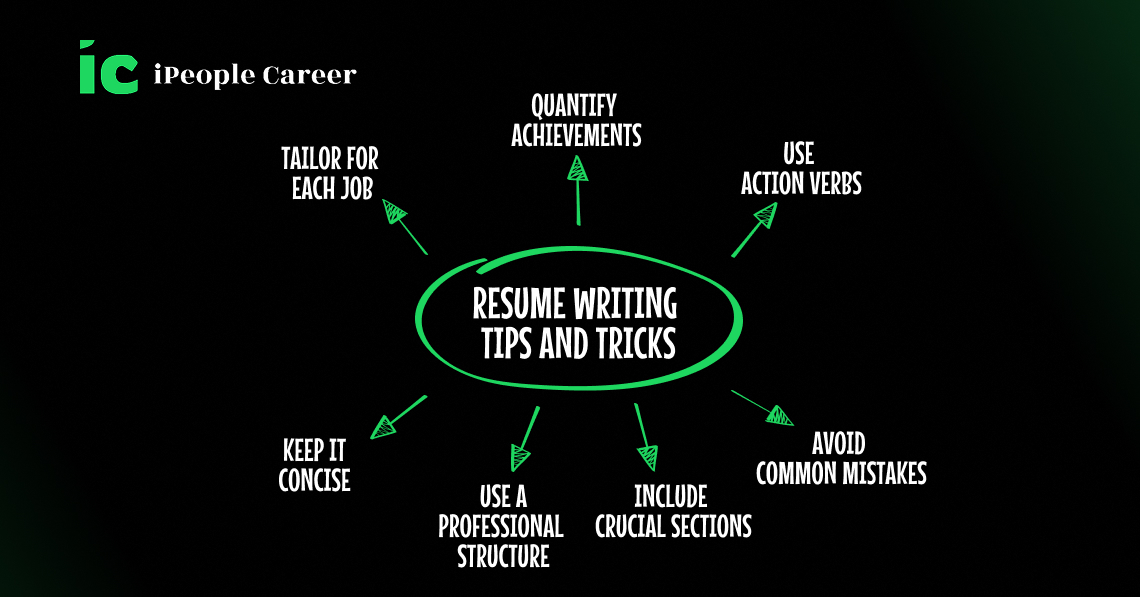
Every time, make sure that you are tailoring your resume for each individual job that you are applying to. Highlight the capabilities and experiences that are in line with the job requirements. This will demonstrate to the hiring managers that you are the top candidate.
Quantify Achievements
Show your impact using numbers whenever possible. Instead of saying you improved something, mention by how much, like percentages or results. This makes your experience clearer and more convincing.
Use Action Verbs
Use strong action verbs such as “managed, ” “created, ” “improved, ” or “led” to begin your statements. This will not only make your resume more appealing but also demonstrate that you believe in your abilities. It also helps your experience sound more active and results-driven.
Keep it Concise
Avoid adding too much information or long paragraphs. Make your points brief and concentrate only on the most significant things. It is proven that a clear and to-the-point resume is easier to read and more effective.
Use a Professional Structure
Divide your resume into distinct sections such as summary, experience, skills, and education. Maintain uniform formatting throughout so that everything looks tidy and easy to navigate. A well-structured resume leaves a better impression on a potential employer.
Include Crucial Sections
You need to have these main parts on your resume: contact details, summary, work experience, skills, and education. These are the essentials that a recruiter looks for. If you miss any of these sections, your resume can be judged as incomplete.
Avoid Common Mistakes
Do a careful check to make sure that your resume doesn’t contain the typical errors, such as misspellings, incorrect formatting, or displaying old information. Even the tiniest mistake can kill your chances. So, the very critical thing is that your resume should be neat and free from mistakes.
Formatting Tips
Font
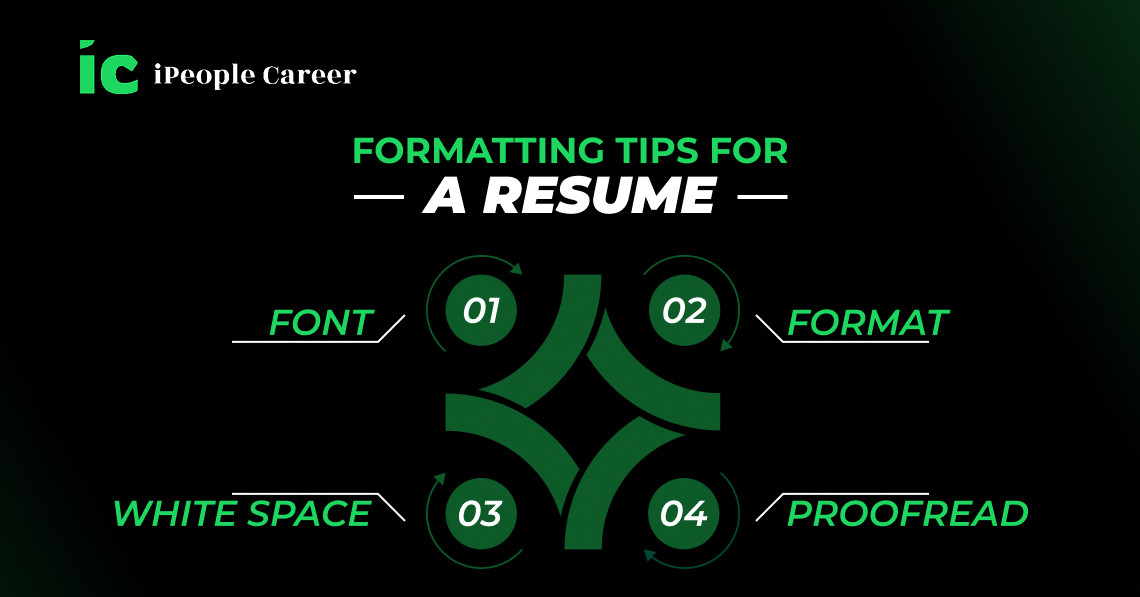
Choose a font that is clean, professional, and easy to read. Good examples are Arial, Calibri, and Times New Roman. Don’t use decorative or fancy fonts because they can make the text hard to read. When you use a clean font, your resume will look professional.
Format
Stick with a consistent layout, including appropriate headings and bulleted lists. Don’t overdo the colors or complex designs. Plain formatting is the easiest for both HR representatives and ATSs to work with.
White Space
Check that your resume is sufficiently spaced, both between different sections and lines of the same section. Having one place overloaded with text can backfire and make your resume look crowded. Proper spacing is another factor in making your resume easier to read.
Proofread
Make sure to proofread your resume before submission. Look for errors in spelling, grammar, and layout. Also, it is helpful to get another person’s opinion for a fresh perspective.
Final Thought
Your resume can either open doors or close them in seconds. The difference is not your experience, but how you present it. Small mistakes like typos, poor formatting, or generic content can hold you back, even if you are a strong candidate.
The good part is that most of these mistakes are easy to fix once you are aware of them. By tweaking your resume just slightly, you get a document that is quite straightforward, very focused, and an easy read for recruiters.
And if you feel unsure about where to start, iPeople Career is here to support you. We offer a broad range of services, starting from resume drafting, going through LinkedIn optimization to interview coaching, which allows you to showcase your profile at its best.
See you in the next blog with more helpful tips, insights, and updates, or maybe even while we’re working together on improving your resume.
FAQs
Q- How to write Best Resume Writing?
A- Start by keeping your resume clear, simple, and focused on the job you are applying for. Highlight your key skills and achievements instead of just listing duties. Use a clean format and make sure everything is easy to read.
Q- Why is my resume getting rejected so quickly?
A- Your resume may be getting rejected due to small issues like missing keywords, poor formatting, or generic content. Recruiters and ATS systems look for relevance and clarity. If your resume doesn’t match the job, it may not get noticed.
Q- What are 5 common mistakes people make on their resumes?
A- Some common mistakes include typos, using the same resume for every job, listing duties instead of results, poor formatting, and adding irrelevant information. These mistakes can make your resume less effective. Fixing them can improve your chances quickly.
Q- What are red flags on a CV?
A- Red flags include unexplained gaps, too many job changes, spelling errors, or unclear information. Exaggerated or false details can also raise concerns. Recruiters may question your credibility if they notice these issues.
Q- What are the 3 C’s of a resume?
A- The 3 C’s are Clear, Concise, and Consistent. Your resume should be easy to read, to the point, and well-structured throughout. This helps recruiters quickly understand your profile and experience.